
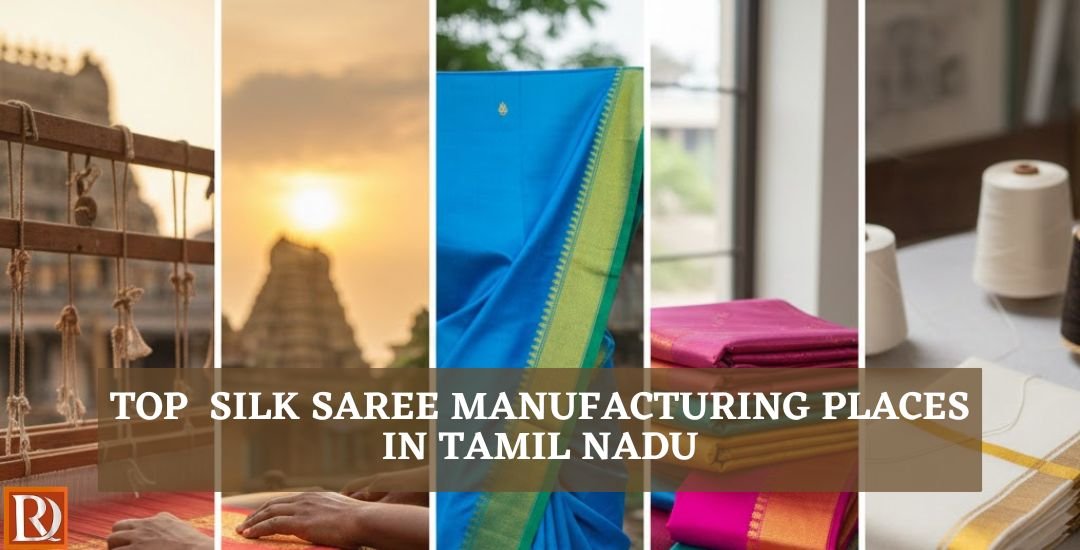
Tamil Nadu is the heart of India’s silk industry, with a weaving tradition that goes back centuries. For anyone looking for authentic pattu sarees, understanding where they are made is the best way to find the right quality and style. Each town in the state has its own unique signature weave and specialty. In this post, we look at the top five places in Tamil Nadu famous for manufacturing the finest silk sarees.
5 Silk Saree Manufacturing Places in Tamil Nadu
Here are the top five places in Tamil Nadu where the finest silk sarees are born.
1. Kanchipuram
Kanchipuram is the undisputed king of the silk world. Located just a few hours from Chennai, this temple town has been a weaving hub for over 400 years. The specialty of a Kanchipuram saree lies in its weight and the “Korvai” technique. In this method, the border and the body of the saree are woven separately and then joined together with a zig-zag interlocking pattern that is incredibly strong.
A genuine Kanchi pattu uses pure mulberry silk and “Real Zari”—silk thread wrapped in silver and then dipped in 22k gold. This makes the saree an heirloom that lasts for generations. If you are looking for the “Muhurtham” saree or a heavy bridal look that matches a premium silk wedding dhoti, Kanchipuram is your destination. The designs are usually inspired by temple architecture, featuring peacocks, elephants, and mango motifs.
2. Thirubuvanam
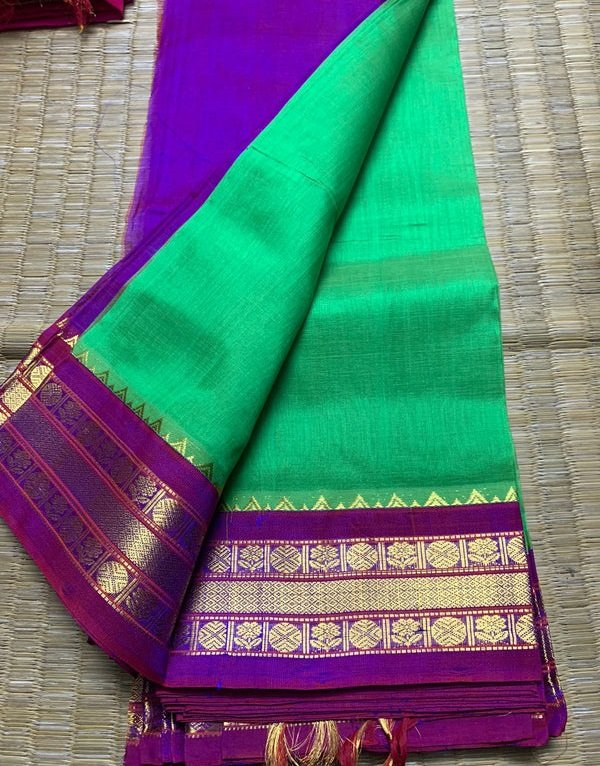
Located near Kumbakonam, Thirubuvanam is the hidden gem of the Thanjavur district. Its specialty is the single-unit weaving style. Unlike Kanchipuram, the border and body are not joined later; they are woven as one single piece. This results in a very durable saree that doesn’t have a “joint” that could tear over decades.
Thirubuvanam weavers use high-quality filature silk for both the warp and weft, giving the fabric a uniform, high-lustre finish. Another unique trait is the Visirimadipu way these sarees are folded—they are typically folded like an Angavasthram (the way dhotis are folded), making them easy to carry and store. If you want a saree that is grand yet feels incredibly smooth and easy to drape, thirubuvanam sarees are the perfect choice.
3. Arani
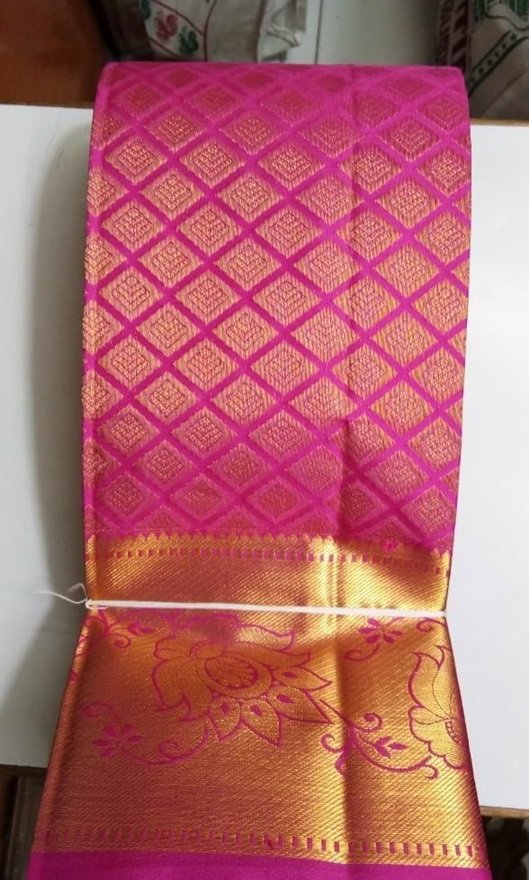
If you want the look of a heavy silk saree without the back-breaking weight, Arani is the place to go. Arani sarees are famous for being lightweight and innovative. A typical Arani saree weighs only about 300 to 400 grams, making it much more comfortable for long wedding ceremonies or reception parties where you need to move around a lot.
The real “Arani specialty” is the Double-Side Saree. Master weavers here can create a saree with two different bodies and two different pallus on either side. This essentially gives you two sarees for the price of one! They are more affordable than Kanchipuram weaves because they use slightly less zari, making them the smart choice for bridesmaids or festival wear.
4. Salem
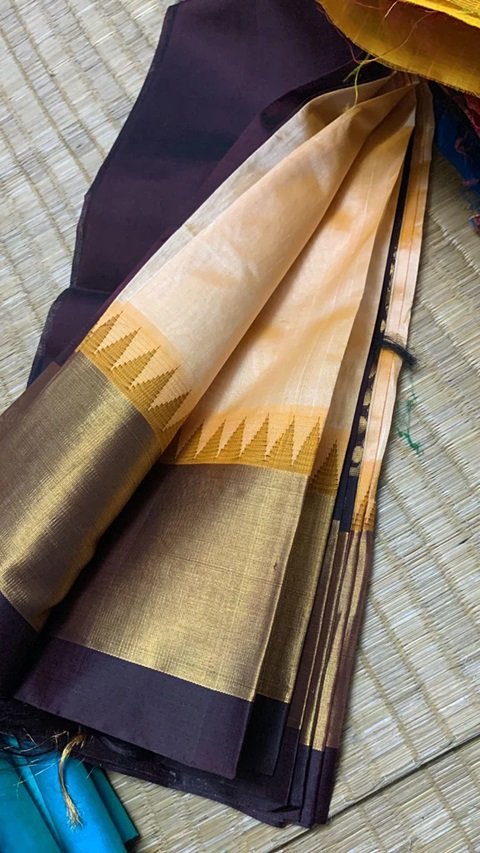
For those of us who love traditional white dhotis, Salem needs no introduction. However, it is also a powerhouse for silk sarees. The specialty of Salem silk is its silky texture and durability of color. Because of the unique water quality and climate in Salem, the dyeing process results in very vibrant, “fast” colors that do not fade easily over time.
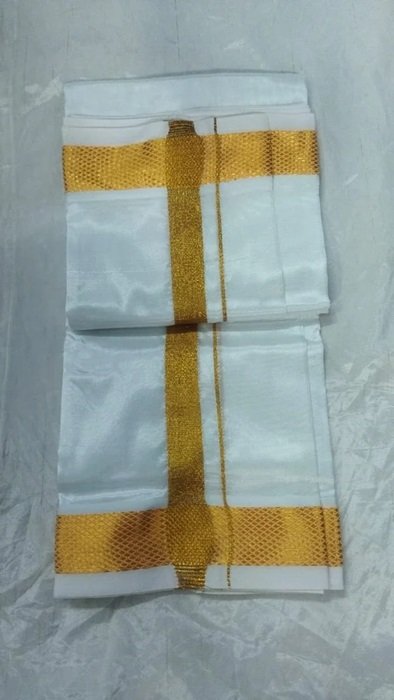
While Salem is world-famous for its Venpattu (Pure White Silk Dhotis with Gold Borders), its sarees are known for having a very smooth, polished finish. They often use a “Dobby” or “Jacquard” technique to create intricate but clean patterns. If you are buying a wedding dhoti set for the groom, visiting a manufacturer in Salem allows you to pick a matching silk saree for the bride from the same loom.
5. Rasipuram
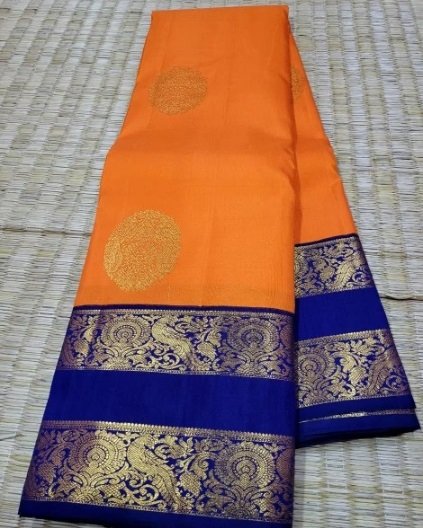
Rasipuram is known as the “King’s Town,” and its textiles live up to the name. The specialty of Rasipuram silk is its simplicity and extreme durability. These sarees are often called “Classic Pattu” because they stick to traditional roots without becoming overly flashy. They are much lighter than Kanchipuram sarees and are known for their fast-color dyeing.
One of the most recognizable features of a Rasipuram saree is the temple border and checkered patterns. The weavers here use a specific thread count (usually 5,600 threads in the warp) which ensures the fabric is breathable but very strong. They are ideal for women who prefer a sophisticated, understated look. Buying from Rasipuram is a great way to support small-scale artisanal clusters that have preserved their craft for centuries.
Which City’s Silk is Right for You?
Choosing the right place for a wedding saree depends entirely on your role in the occasion. Each of these manufacturing hubs specializes in a specific “vibe” and price point. Here is how to decide
For the Bride: Kanchipuram or Thirubuvanam
If you are the bride, you need a saree that stands out in photos and carries a royal weight.
-
Kanchipuram is the go-to for the main wedding ceremony (Muhurtham). Its heavy zari and thick silk give that classic queen-like look.
-
Thirubuvanam is an excellent alternative if you want something unique. Because the border and body are woven as one, the drape is incredibly smooth, and the “filature silk” gives it a continuous, rich shine that looks stunning under stage lights.
For the Groom (Dhotis): Salem
A wedding look is incomplete without a matching groom. Salem is the undisputed capital for Pure Silk Dhotis (Venpattu). If you are buying a premium Kanchipuram saree for the bride, a Salem silk dhoti with a matching gold zari border is the traditional way to coordinate the couple’s outfit. The silk produced here is known for its pure white/cream dhotis luster which perfectly complements any bridal saree color.
For Guests and Gifting: Arani or Rasipuram
When you are attending a wedding as a relative or friend, you want to look elegant without the heaviness (or the price tag) of a bridal saree.
-
Arani is perfect for reception parties or as a “change-saree” for the bride’s sisters. They are lightweight, colorful, and much easier to manage for long hours.
-
Rasipuram sarees are the best choice for gifting. They are durable, have beautiful traditional motifs, and offer the best value for money in the “Pure Silk” category. They are sophisticated enough for the groom’s mother or close relatives.
Conclusion
Whether it is the grand Thirubuvanam for a bride or a sturdy Salem silk for a groom’s wedding set, Tamil Nadu’s manufacturing hubs offer something for every budget. Next time you plan a wedding purchase, skip the malls and take a trip to the source.





Pingback: Kanchipuram Silk Vs Thirubuvanam Silk Sarees - Which Silk Saree is Best for Wedding?
Pingback: Top 10 Traditional Thirubuvanam Silk Saree Motifs and Patterns
Pingback: Different Types of Pattu Sarees: A Complete Guide
Pingback: What is Soft Silk Saree? Everything You Need to Know About This Modern Drape