
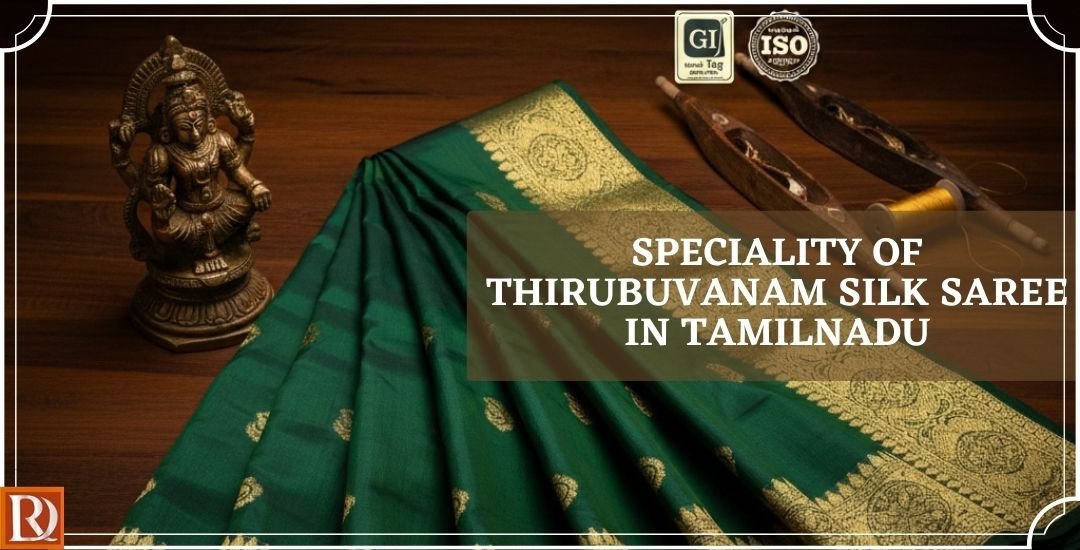
Thirubuvanam silk sarees are the crown jewels of Tamil Nadu’s weaving tradition. While they are often compared to kanchipuram silks and other South Indian silks, they possess a unique technical “DNA” that sets them apart.
If you are looking for a saree that combines extraordinary luster, durability, and heritage value, Thirubuvanam silk saree is the one you go for.
10 Specialities of the Thirubuvanam Silk Saree
Whether you are a textile enthusiast or a bride-to-be looking to understand these unique “specialities,” this blog post will explain the 10 specialities of Thirubuvanam silk saree.
1. The Luster of 3-Ply Filature Silk
The most immediate speciality of a Thirubuvanam saree is its mirror-like shine. Unlike other sarees that may use different grades of silk, these use high-quality 3-ply filature silk for both the warp (lengthwise) and the weft (crosswise). This creates a uniform, dense texture that reflects light beautifully.
2. Single Warp Construction (Tear-Proof Design)
A major technical speciality is the Single Warp technique. In most luxury sarees, the border and body are woven separately and joined. In Thirubuvanam, the body and border are woven as one continuous piece. This seamless construction makes the saree incredibly durable and prevents the borders from splitting over time.
3. The Signature "Visirimadippu" (Fan Fold)
Authenticity can be spotted by how the saree is folded. The Visirimadippu is a traditional fan-style fold. Two weavers work in tandem using wooden rods to create sharp, crisp pleats. This folding method is a unique hallmark of the Thirubuvanam cooperative society.
4. Heavyweight Garment
These sarees are known for their substantial feel. A genuine Thirubuvanam silk saree is a “heavyweight” garment, typically weighing between 450g and 1,250g. This weight is a direct result of the high silk count and the richness of the zari used.
5. Pure Silver and 22k Gold Zari
Thirubuvanam sarees are a true investment. They use pure silver wire coated with 22k gold. Because they are often woven with heavy zari on one side, they carry significant precious metal value, making them prized family heirlooms.
6. Temple Jewelry Motifs
The designs are a tribute to Tamil culture. You will find intricate patterns inspired by traditional, such as:
-
Neli: Wavy lines resembling toe rings.
-
Vanki: The classic armlet shape.
-
Muthu: Small bead patterns representing pearls.
7. Chola Architectural Inspiration
The weavers draw artistic inspiration from the local Kampaheswarar Temple. Motifs like the Kalasam (sacred pot), Yazhi (mythical creature), and Gopuram (temple tower) reflect the grand Chola architecture of the region.
8. Prismatic Color Depth
Due to the high-grade filature silk and specialized dyeing, these sarees exhibit prismatic colors. The fabric often shows a “dual-tone” effect, where the color seems to shift and change depth as the wearer moves.
9. GI Tag and Silk Mark Protection
To protect this unique craft, the Thirubuvanam silk saree was granted a GI Tag in 2019. This ensures only sarees from this region use the name. Additionally, authentic sarees come with the Silk Mark, which serves as a government-backed guarantee of 100% pure natural silk, protecting buyers from imitations
10. Authentic Handloom Craftsmanship
Every Thirubuvanam saree is a product of traditional handloom weaving. Unlike powerloom fabrics, these handloom sarees are woven by skilled artisans who control the tension of every thread. This human touch ensures a superior finish and a level of detail that only genuine handloom work can provide.
Conclusion
The speciality of the Thirubuvanam silk saree lies in its perfect balance of artistry and engineering. From the seamless single-warp weave to the prestigious GI tag and Silk Mark, it remains a durable, high-luster symbol of Tamil Nadu’s rich handloom textile legacy. These unique qualities ensure that each handloom saree is a timeless masterpiece that lasts for generations.







Pingback: What is Silk Mark in Thirubuvanam Silk Sarees? How to Verify and Why It Matters
Pingback: Kanchipuram Silk Vs Thirubuvanam Silk Sarees - Which Silk Saree is Best for Wedding?
Pingback: Top 5 Silk Saree Manufacturing Places in Tamil Nadu
Pingback: Top 10 Traditional Thirubuvanam Silk Saree Motifs and Patterns
Pingback: How to Identify Real Gold Zari in Thirubuvanam Wedding Pattu
Pingback: 22 Different Types of Pattu Sarees: A Complete Guide
Pingback: Which Silk Saree is Best for Wedding
Pingback: 5 Trusted Places to Buy Thirubuvanam Silk Sarees Online