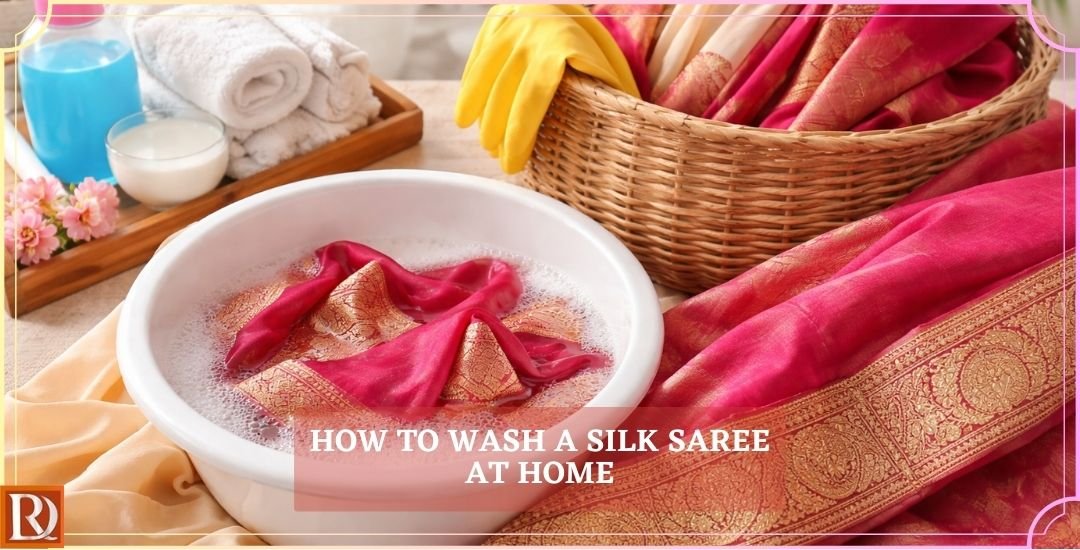
Washing a silk saree at home requires a gentle touch to maintain the fabric’s natural luster and strength. While professional dry cleaning is often recommended, you can safely clean silk using a mild detergent or traditional soapnuts (Reetha) by following these simple, practical steps.
Preparation and Safety Check
Perform a color fastness test: Dab a small, hidden corner of the pallu with a wet cotton swab to ensure the dye does not bleed.
Use cold water only: High temperatures damage silk fibers and cause shrinkage.
Avoid harsh chemicals: Never use bleach, fabric softeners, or strong granulated detergents.
Method 1: The Modern Hand Wash
Dilute the detergent: Mix one teaspoon of a liquid silk wash or baby shampoo into a bucket of cold water.
Soak briefly: Submerge the saree for no more than 5 minutes to prevent the fibers from weakening.
Clean gently: Agitate the water with your hands; do not scrub, brush, or rub the fabric.
Rinse thoroughly: Move the saree to a bucket of fresh cold water and rinse until all soap residue is gone.
The vinegar trick: Add one tablespoon of white vinegar to the final rinse to restore the silk’s shine and neutralize pH levels.
Method 2: The Traditional Reetha Wash
Prepare soapnut liquid: Boil 10–12 Reetha (soapnuts) in water, strain the liquid, and let it cool completely.
Dilute and soak: Mix the Reetha extract into a bucket of cold water and soak the saree for 10 minutes.
Gentle agitation: Squeeze the fabric lightly within the solution to release dirt.
Final rinse: Wash with plain cold water until the water runs clear and free of foam.
Drying and Aftercare
Remove excess water: Lay the saree flat on a thick cotton towel and roll it up to soak up moisture; never wring or twist silk.
Dry in shade: Hang the saree in a well-ventilated area away from direct sunlight, as UV rays fade natural dyes.
Steam ironing: Use the lowest heat setting (silk mode) and iron while the fabric is slightly damp, always using a press cloth in between.
Conclusion
Maintaining a pure silk saree at home is achievable with the right technique. By prioritizing cold water hand washing and avoiding mechanical stress, you preserve the tensile strength and vibrant colors of the garment. For heavily embellished Zari work or heirloom pieces, professional care is still the most reliable option.