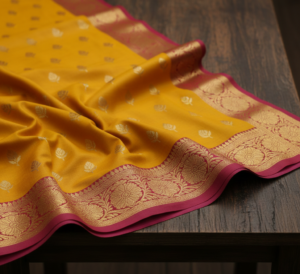
Thirubuvanam silk sarees are defined by their grand, symbolic patterns that transform fine silk into a canvas of heritage. As part of the silk towns of Tamil Nadu, Thirubuvanam has preserved a rich weaving tradition where these motifs, or buttas, become the soul of the weave, representing centuries of culture and spiritual significance. From divine birds to sacred temple towers, each design is meticulously woven to bring blessings of prosperity, grace, and protection to the wearer. Understanding these patterns is the key to appreciating the true artistry and timeless appeal of a Thirubuvanam masterpiece.
Top 10 Traditional Motifs of Thirubuvanam Silk Sarees
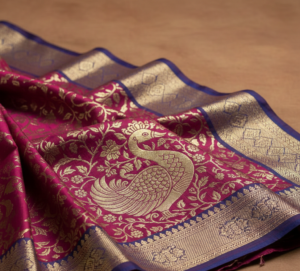
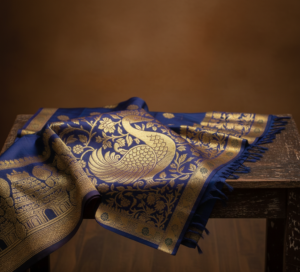
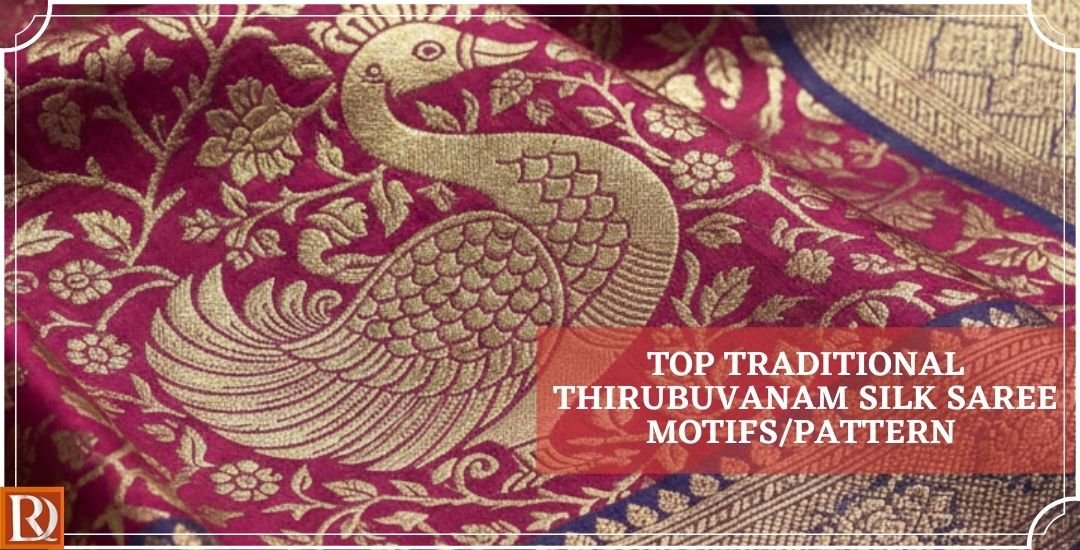
This majestic motif, often depicted with an elegant long neck and flowing tail feathers, is more than just a bird. The Annapakshi symbolizes purity, grace, wisdom, and the ability to discern good from evil. Its presence on a Thirubuvanam saree invokes blessings for a harmonious and discerning life.
2. The Sacred Rudraksham (Shiva's Eye)
The Rudraksham motif, resembling the revered seed associated with Lord Shiva, is deeply spiritual. It signifies protection, peace, and divine blessings, often woven into the borders or as intricate buttas (small motifs) throughout the saree, bestowing a sense of sanctity.
3. The Auspicious Mani (Bell)
The sound of temple bells is synonymous with auspicious beginnings and divine presence. The Mani motif, often seen in repetitive patterns on the borders, brings forth blessings, good fortune, and the resonance of sacred traditions, especially fitting for wedding sarees.
4. The Distinctive Kuyil Kan (Cuckoo's Eye)
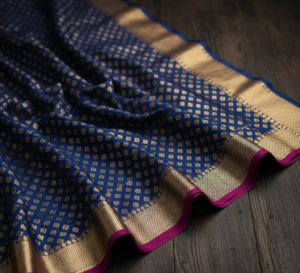
This charming pattern, typically a small, repeated diamond or eye-like shape, is known as “Kuyil Kan” due to its resemblance to a cuckoo’s watchful eye. It’s a classic example of how nature inspires design, symbolizing alertness, grace, and subtle beauty.
5. The Fragrant Mallinaggu (Jasmine Bud)
The delicate Mallinaggu, or jasmine bud, represents purity, love, new beginnings, and fertility. Its gentle presence on a saree evokes the sweet fragrance of fresh blooms and is particularly cherished in bridal attire, symbolizing the blossoming of a new life.
6. The Grand Gopuram (Temple Tower)
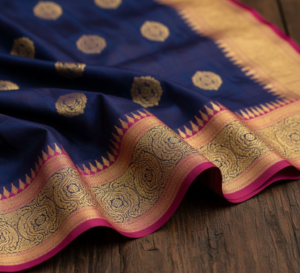
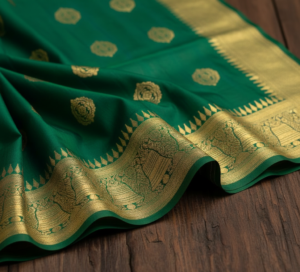
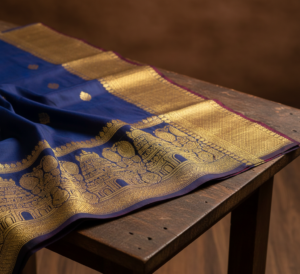
The iconic Gopuram, the towering entrance to South Indian temples, is a magnificent and elaborate motif. It represents spirituality, divinity, and a connection to sacred spaces, often gracing the grand borders or pallu (the decorative end-piece) of a Thirubuvanam saree.
7. The Flourishing Kamalam (Lotus)
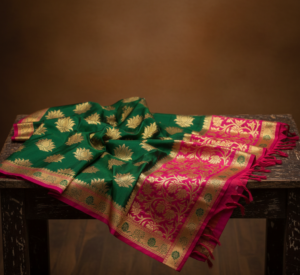
The lotus, or Kamalam, is a revered symbol in Indian culture, representing purity, beauty, spiritual enlightenment, and prosperity, often associated with Goddess Lakshmi. Its blooming presence on a Thirubuvanam saree brings forth blessings of wealth and grace.
8. The Royal Mayil (Peacock)
The peacock, with its vibrant plumage and elegant dance, is a national symbol of India, representing beauty, grace, love, and royalty. The Mayil motif is a perennial favorite, often woven in rich zari, adding a majestic flair to the saree.
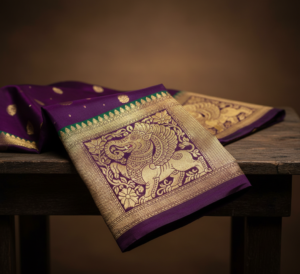
9. The Mythical Yali (Gryphon-like Creature)
The Yali, a mythical creature often depicted with the body of a lion, trunk of an elephant, and sometimes the features of a horse, is a powerful protector. Its presence on a saree symbolizes strength, valor, and guardianship, warding off evil.
10. The Intertwined Kodimalar (Creepers/Vines)
The Kodimalar represents the graceful, winding growth of nature. This motif signifies the beautiful “interconnectedness” of two families coming together. It is a symbol of vitality and the flourishing growth of a new life, making it a favorite for the pallu and borders of wedding sarees.
Why Choose Thirubuvanam Motifs?
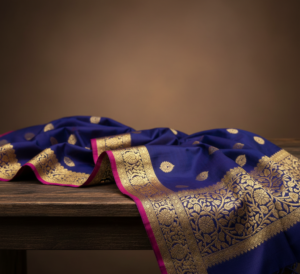
When you wear a Thirubuvanam saree, you aren’t just wearing a garment; you are wearing a Jacquard Masterpiece. These designs are created using a specialized weaving technique where the “Extra Weft” (the gold thread) is woven specifically to raise the pattern above the silk, giving it a 3D effect.








Pingback: Top 25 Silk Saree Brands in India: The Ultimate List
Pingback: 22 Different Types of Pattu Sarees: A Complete Guide
Pingback: Differences Between Silk Saree and Wedding Silk Saree
Pingback: How to Look Slim in Silk Saree: 13 Practical Tips
Pingback: 5 Trusted Places to Buy Thirubuvanam Silk Sarees Online
Pingback: 10 Best Silk Saree Shops in Chennai for Authentic Handloom Drapes
Pingback: Speciality of Thirubuvanam Silk Saree in Tamilnadu