
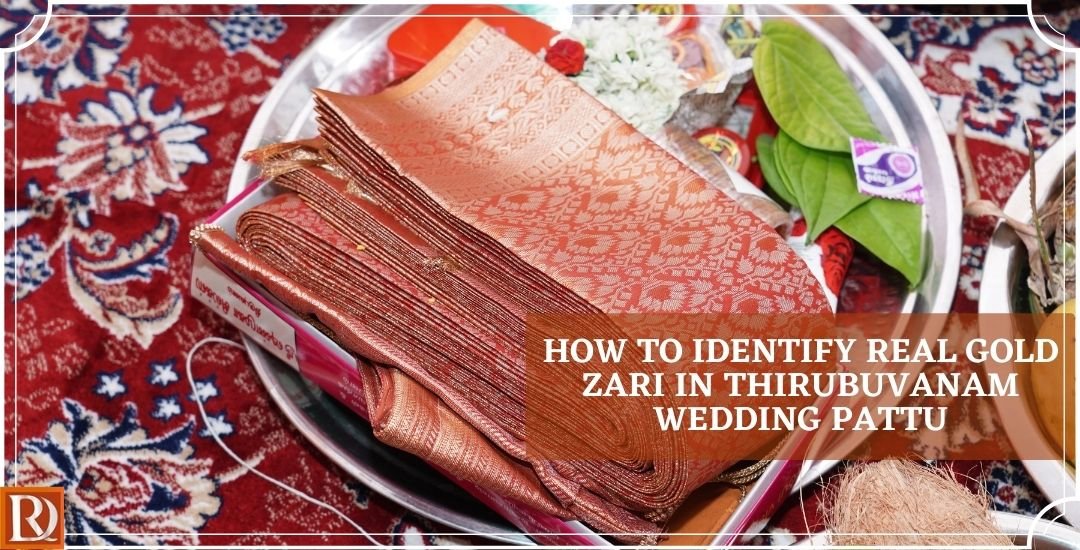
Choosing a wedding pattu saree is a lifetime investment, and in the world of South Indian silks, the Thirubuvanam Silk Saree stands in a league of its own. Known for its unique folding style and heavy 3-ply silk, its most valuable feature is the Pure Gold Zari.
However, with many “tested” or synthetic zaris in the market, it is crucial to know how to spot the real deal. Here is how you can identify authentic gold zari without damaging your precious purchase.
How to Identify Real Gold Zari
1. The Shine and Luster
Take a moment to observe the gold patterns under normal, natural light to check the quality of the reflection.
-
Real Gold Zari: It emits a soft, warm, and rich glow that looks elegant and sophisticated rather than overwhelming.
-
Fake Zari: It typically looks very flashy or glittery, often having a cheap, bright yellow “plastic” look that lacks depth.
2. The Magnet Test
Since precious metals have specific properties, you can move a small magnet over the gold border or pallu to check for purity.
-
Real Gold Zari: Real gold and silver are non-magnetic, so the magnet will not stick to the metallic work.
-
Fake Zari: If the magnet pulls or sticks to the fabric, the zari is made of cheap base metals like iron or steel.
3. Weight of the Saree
Hold the saree in both hands to feel the weight of the gold work compared to the rest of the fabric.
-
Real Gold Zari: These sarees are notably heavy, usually weighing between 700g and 1.2kg, because real silver and gold have significant weight.
-
Fake Zari: If a grand-looking saree feels unusually light, the zari is likely made of lightweight synthetic polyester or plastic.
4. The Reverse Texture
Turn the saree over to inspect the back of the gold weaving where the threads are more exposed.
-
Real Gold Zari: The back looks dull reddish-silver and feels very smooth to the touch against your skin.
-
Fake Zari: Both sides usually look the same bright yellow, and the reverse side often feels rough, prickly, or itchy.
5. Silk Mark Label
Always check the saree for official government labels that prove it was made by authorized weavers.
-
Real Gold Zari: Authentic sarees carry an official Silk Mark label, which serve as a guarantee of metal purity.
-
Fake Zari: These sarees usually have no official labels or use generic stickers that lack the specific Thirubuvanam cooperative society details.
6. The Burn Test
I don’t recommend this test for everyone, as it is nearly impossible to perform while buying. Practically speaking, you cannot burn a saree before purchasing it; sellers simply won’t allow it, even with a single piece of thread. However, if you have a loose thread or a chance to test a sample with caution, here is what to look for:
-
Real Gold Zari: Pull out a single zari thread and burn it. It will leave behind a dull grey ash ball (the silver content) and smell like burnt hair (the pure silk core).
-
Fake Zari: It will melt into a hard black plastic bead and emit a chemical or “burnt paper” smell, indicating a polyester or cotton core.
Why Real Zari Sarees Are Worth the Investment
-
Financial Value: Real zari is made by winding pure gold over a silver wire. It holds intrinsic bullion value, meaning you can actually exchange or sell the old zari for its metal weight in the future.
-
Heirloom Quality: A Thirubuvanam saree with real zari can last for generations. Unlike fake zari, which peels or turns black within a few years, real zari maintains its grace for decades.
-
Unmatched Comfort: Because the core is pure silk, real zari is flexible and breathable. It won’t cause skin irritation or rashes during long wedding rituals.
-
Supporting Craftsmanship: Buying authentic sarees ensures that the traditional Thirubuvanam Weaver Cooperatives continue to thrive and keep this 1,000-year-old art alive.
Tips for Maintaining Your Thirubuvanam Silk
-
Dry Clean Only: To protect the delicate metal plating, never wash your silk saree at home.
-
Avoid Perfumes: Never spray perfume directly on the zari, as the alcohol can cause the silver to tarnish.
-
Store in Muslin: Wrap your saree in a soft cotton or muslin cloth. Avoid plastic bags, which trap moisture and can ruin the zari’s shine.
-
Refold Regularly: Every 3–4 months, take the saree out and change the fold lines to prevent the heavy zari from cracking the silk.
Conclusion
A Thirubuvanam wedding pattu saree is more than just a garment; it is a piece of heritage. By checking the luster, the weight, and the silk core, you can ensure that your investment is as authentic as your traditions. Always buy from reputed co-operative societies or certified dealers to get the true value for your money.







Pingback: Top 25 Silk Saree Brands in India: The Ultimate List
Pingback: Which Silk Saree is Best for Wedding
Pingback: How to Identify Pure Silk Saree: Gudie For Both Online and Offline Buyers